



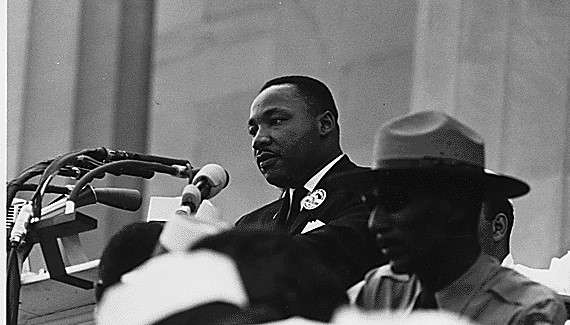
Dr. Martin Luther King, Jr., a towering figure of the American Civil Rights Movement, emerged as a beacon of hope and justice during the 1950s, championing nonviolent resistance to dismantle systemic racism. His visionary leadership and steadfast commitment to equality have etched an indelible legacy, making Martin Luther King Jr. Day a time for reflection on his transformative work and the ongoing struggle for freedom and justice.
Activist for Equality
As a Baptist minister, Dr. King recognized the deep connection between race and poverty, understanding that systemic economic inequality was a tool of oppression that transcended racial lines, though disproportionately affecting Black Americans. He argued that the same structures maintaining racial segregation also perpetuated economic disparity, creating a cycle of poverty that trapped people of all backgrounds. Dr. King highlighted how the U.S. economic system, designed to prioritize profit over people, exploited poor whites and marginalized Black communities alike, fostering division to maintain the status quo.
Through his work with the Poor People’s Campaign, he emphasized the shared struggles of all impoverished Americans and called for a coalition across racial lines to demand living wages, access to education, and fair housing. Dr. King’s message challenged the nation to confront not only its racial injustices but also the systemic economic inequalities that continue to undermine the promise of equal opportunity for all.
Numerous demonstrations that ignited pivotal legislative breakthroughs in the United States were spearheaded by Dr. King. His leadership was instrumental in the passage of landmark laws, including the Civil Rights Act of 1964, the Voting Rights Act of 1965, the Immigration and Nationality Act of 1965, and the Fair Housing Act of 1968. Beyond U.S. borders, Dr. King’s advocacy resonated on the global stage, influencing the adoption of the 1965 International Convention on the Elimination of All Forms of Racial Discrimination (CERD) and advancing the international human rights movement.
Dr. King’s “I Have a Dream” speech, hailed as the greatest speech of the 20th century, remains a powerful call for racial harmony and equality. Though his life was tragically cut short by an assassin in 1968, his enduring achievements underscore the profound truth that one determined individual can indeed change the course of history.
Among Dr. King’s accomplishments:
- 1964 Nobel Peace Prize winner 1964
- Earned two graduate degrees – Theology and Philosophy
- Received over 50 honorary degrees
- 1963 Time magazine’s “Man of the Year”
- Authored 6 books
- Spoke at over 2,500 events
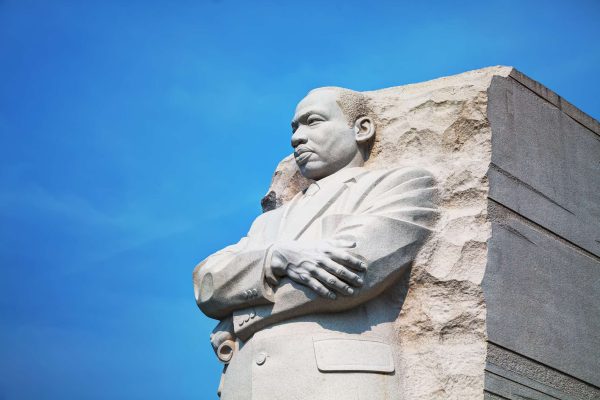
President Ronald Reagan signed the bill making Martin Luther King Jr. Day law in November 1983, and the first King holiday was celebrated in 1986. All 50 states recognized MLK Day as a state holiday by 2000. In 2011, the Martin Luther King Jr. Memorial on the National Mall in Washington, D.C., was opened to the public.