



Hospitals and healthcare workers across the United States are grappling with a surge in viral infection cases, prompting health officials to label the situation a “quad-demic.” According to the CDC, influenza, RSV, COVID-19, and norovirus are all circulating at above-normal levels for this time of year, with some regions reporting “high” or “very high” activity.
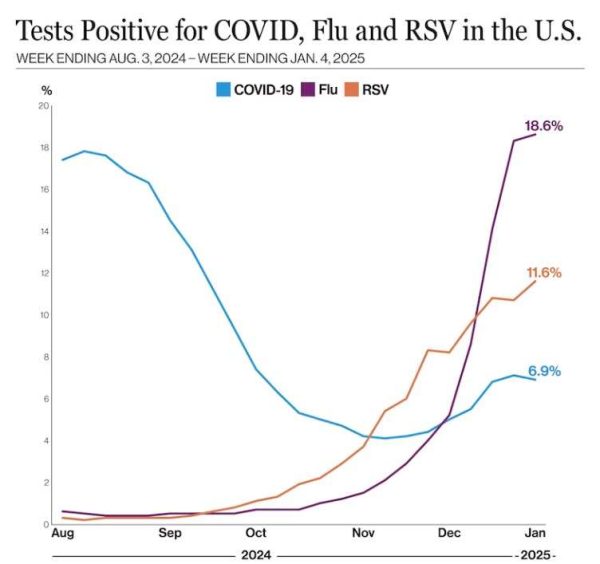
Scott Roberts, MD, medical director of infection prevention at Yale New Haven Health, told ABC News that it’s typical for cases of these viruses to increase during the winter months, but “the rate of increase has been especially concerning.”
Recent CDC data shows an 18.8 percent rate increase for positive influenza test results. COVID-19 is up 6.6%, and RSV is up 8.9%. Meanwhile, norovirus has an overall whopping 27.91% positive test result, the highest level for the virus since 2019.
The surge is creating extended wait times in emergency rooms and straining hospital resources.
“The current spike underscores the need for more international staffing help,” said American Association of International Healthcare Recruitment President and MedPro International Executive Vice President, International Operations Patty Jeffrey, R.N. “A consistent flow of international nurses is crucial for hospitals relying on this workforce to address patient needs.”
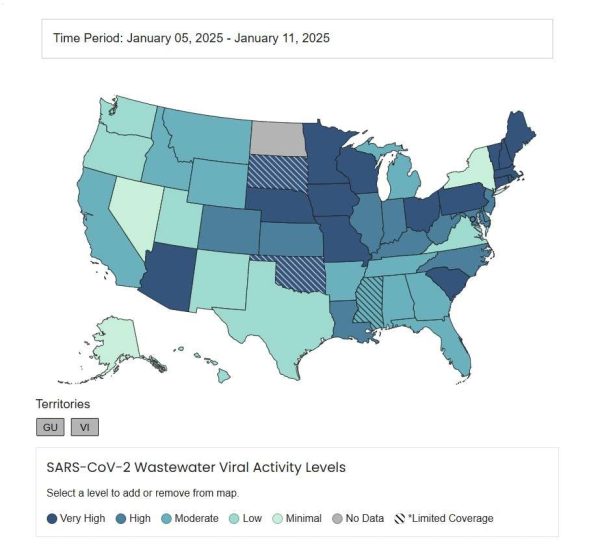
National wastewater surveillance system-provided data shows certain areas, such as Boston, are entering a peak for all four diseases. Samuel Scarpino, director of AI and life sciences and professor of health sciences at Northeastern University in Boston told Fox News Digital. He added, “We are in the middle of a very serious situation with respect to circulating pathogens.”
While some flu symptoms, such as a cough or fatigue, can linger for weeks, symptoms related to the norovirus infection usually last just 1 to 3 days. However, norovirus patients can suffer from flu-like symptoms such as headaches, fever, and body aches in addition to diarrhea, nausea, and vomiting.
“It’s [norovirus] always present,” Dr. Mark Burns with the University of Louisville told WAVE 3 News in Kentucky. “But there’s been a spike we haven’t seen in previous years.” According to the CDC, patients are most contagious when they have symptoms. However, they can spread the virus up to two weeks after feeling better.
Influenza
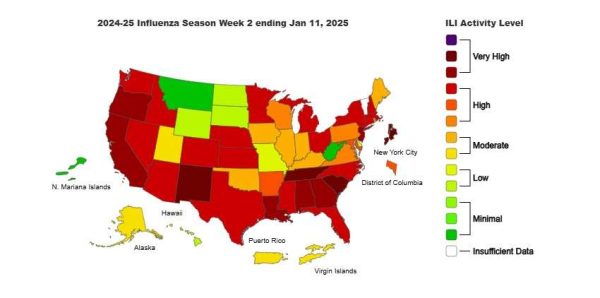
According to recent CDC data, nearly three-quarters of the country is experiencing “High” or “Very High” levels of the flu. Check the CDC website for the latest data.
Symptoms include fever over 100.4°F, cough, sore throat, runny or stuffy nose, muscle or body aches, headaches, fatigue, vomiting, and diarrhea. Symptoms usually last 4 to 7 days, but fatigue and cough can last for weeks.
Antiviral drugs may be an option for more serious cases. Patients should drink plenty of liquids, rest, and use over-the-counter pain relievers such as ibuprofen and acetaminophen if needed.
Norovirus
Norovirus is extremely contagious and can be passed from person to person and through contaminated food, water, or surfaces. Patients are most contagious when they suffer from symptoms and they should be sure to wash their hands well with soap and water. Hand sanitizer alone doesn’t work well on the virus. Also, those sick with norovirus should not handle or prepare food for others. Symptoms include diarrhea, vomiting, nausea, stomach pain, fever, headache, and body aches. Patients should drink plenty of liquids and be alert for signs of dehydration. Severe dehydration may require hospitalization and IV treatment.
RSV
While RSV usually causes mild, cold-like symptoms for most patients, it can pose a serious risk for newborns, infants, and older adults. There is no specific treatment for RSV, but vaccines are available. RSV symptoms include cough, wheezing, sneezing, decrease in appetite, fever, runny or stuffy nose. Patients should drink plenty of liquids and rest. Over-the-counter pain relievers such as ibuprofen and acetaminophen may help.
COVID-19
Although this season’s dominant strain of coronavirus is less severe than past, rates of infection are high. In fact, fifteen states reported “Very High” levels of COVID in wastewater testing.
COVID symptoms include fever and chills, cough, sore throat, shortness of breath, runny or stuffy nose, loss of taste and smell, muscle or body aches, headaches, fatigue, vomiting, and diarrhea. Medications prescribed by a doctor are available for more serious cases, but treatment must start 5-7 days after the first symptoms. Patients should drink plenty of liquids and rest. Pain relievers such as ibuprofen and acetaminophen may help.
The Trump administration issued a halt on public messaging from all federal agencies including the Centers for Disease Control and Prevention and the National Institutes of Health, “until that messaging has been reviewed and approved by a Presidential appointee,” according to NBC News reports. The pause is scheduled through February 1.